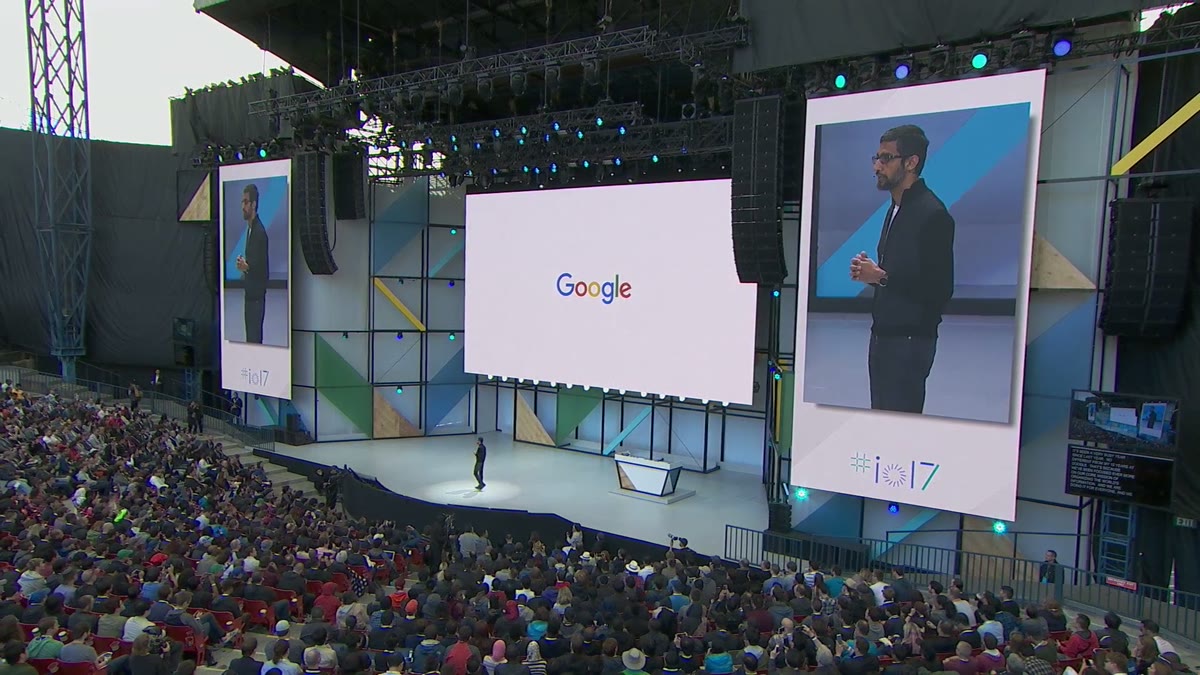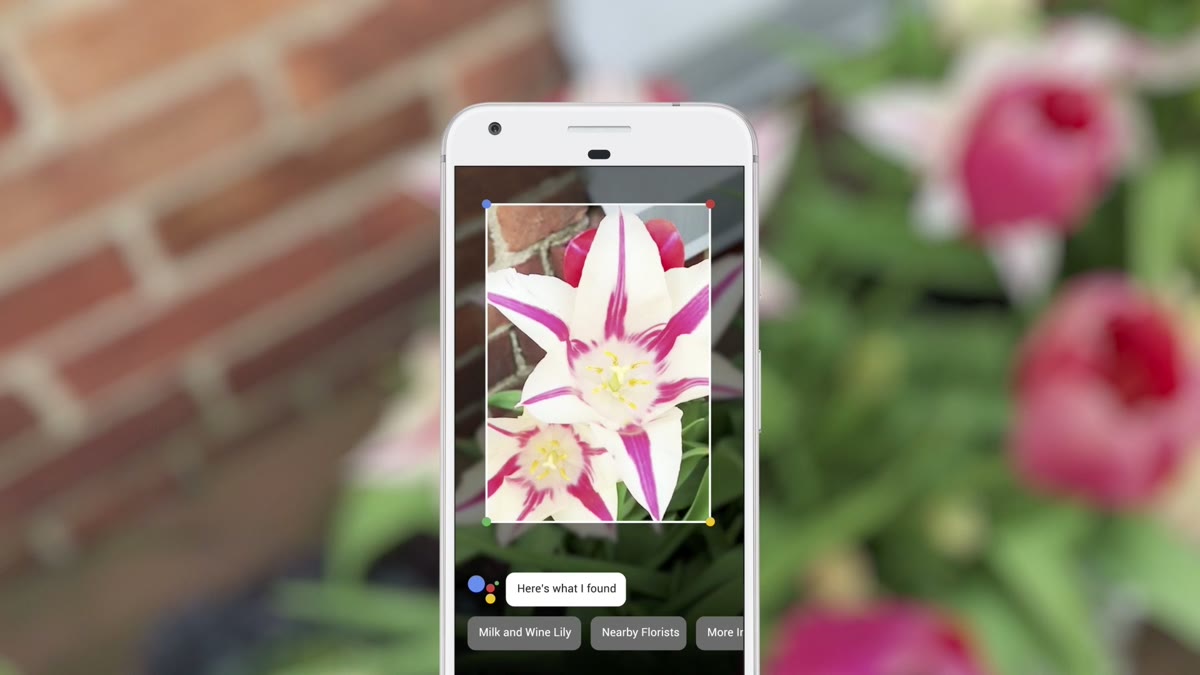
At Google I/O on May 17, 2017, CEO Sundar Pichai unveiled Google Lens as part of a keynote framed around a shift from “mobile first” to “AI first.” The demo pointed a phone’s camera at a flower and had Google Assistant identify it by name; in a second demo, the camera read the network name and password off a router’s sticker and offered to connect automatically. Neither demo answered a question you’d typed: Lens was pitched as software that could see, understand, and then act.
The framing mattered as much as the feature. Google’s core product had always been an answer to a query you wrote. Lens repositioned the camera as the new query box, and by extension repositioned Google as something with a standing interest in whatever your phone’s camera happened to be pointed at, whenever you happened to open it. The convenience and the expanded surface of attention were introduced in the same nine minutes, as the same demo.