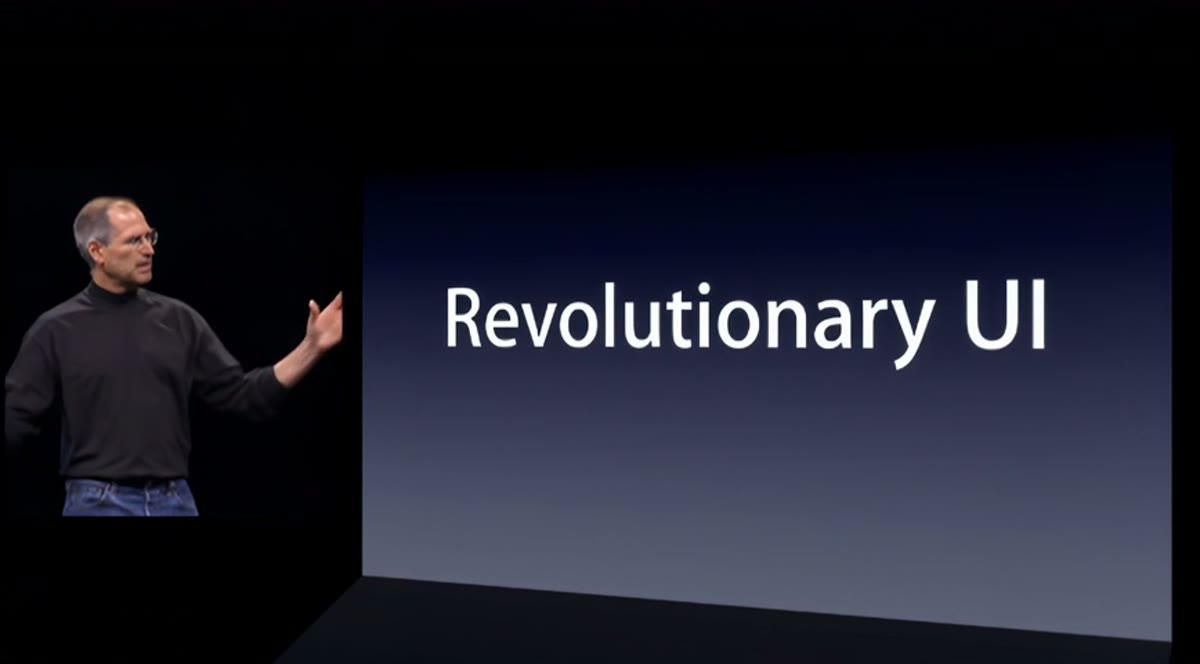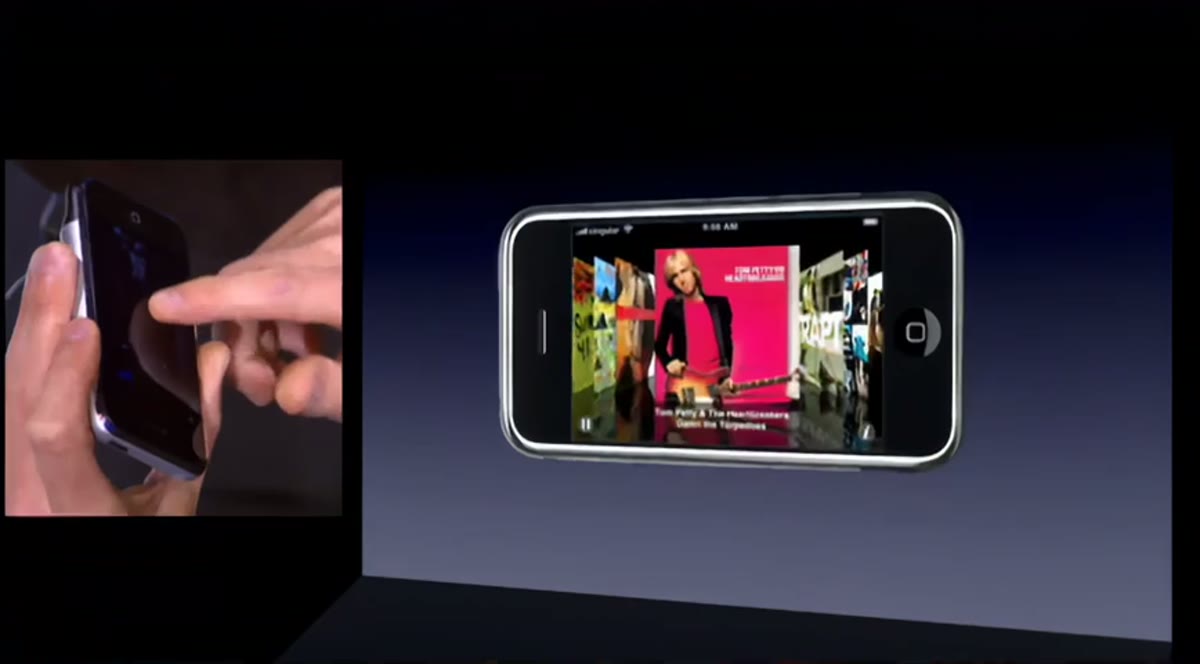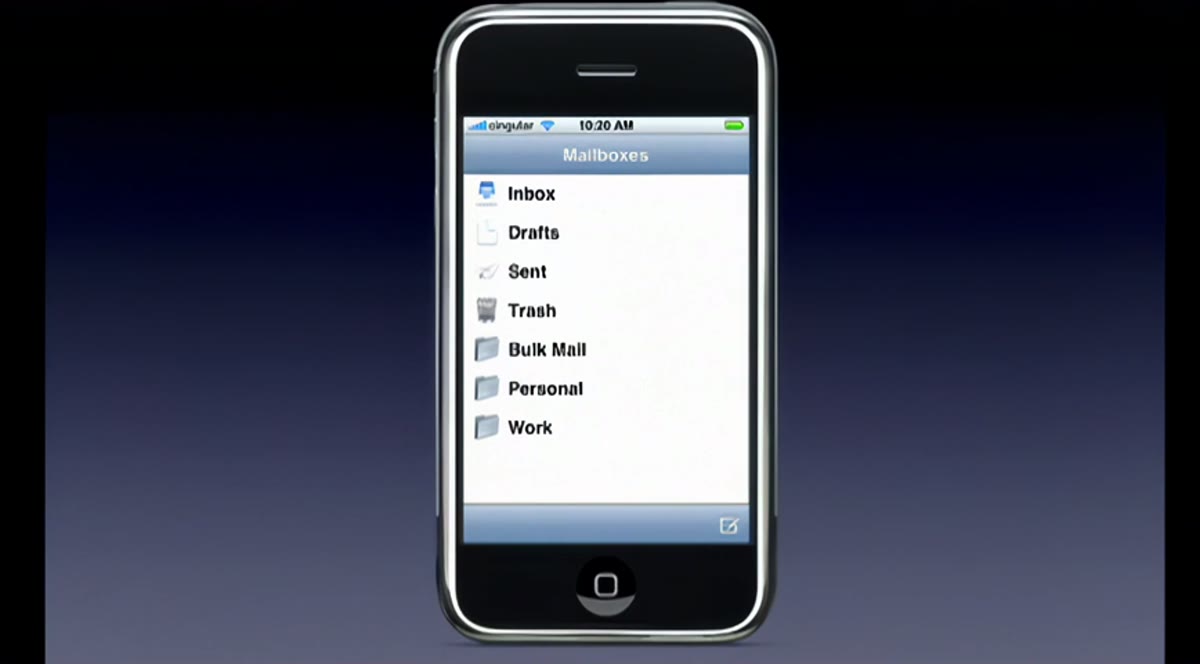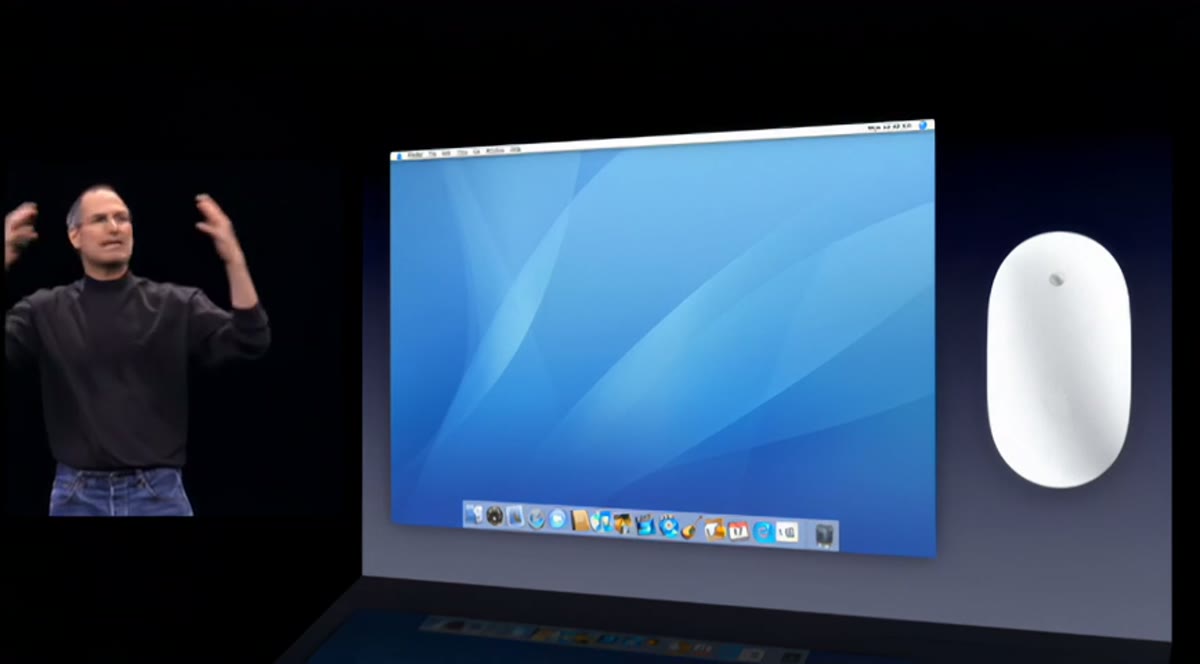
Steve Jobs opened his January 9, 2007 Macworld keynote by telling the audience Apple was introducing three new products: “a widescreen iPod with touch controls,” “a revolutionary mobile phone,” and “a breakthrough internet communications device.” He repeated the list, then paused: “These are not three separate devices. This is one device, and we are calling it iPhone.” The reveal introduced multi-touch to a mass consumer audience for the first time, framed by Jobs as the latest in a lineage of interface revolutions after the mouse and the click wheel.
The keynote ran nearly ninety minutes before Jobs reached a hands-on demonstration, most of it spent explaining why existing smartphones (with their fixed plastic keyboards) had failed, and why software, not hardware, was the right place to put a phone’s interface. It’s a structure (problem, promise, reveal, demo) that framed the iPhone less as a new object than as an argument the audience had already been walked into agreeing with by the time they saw it.